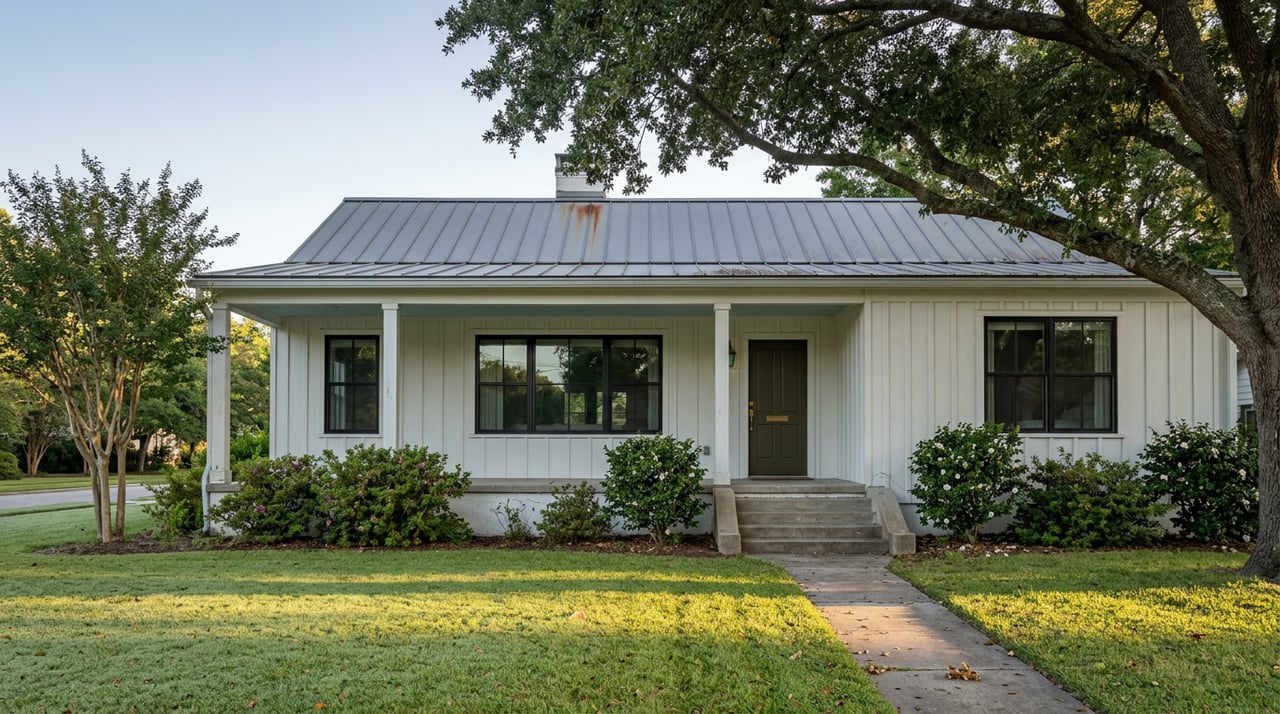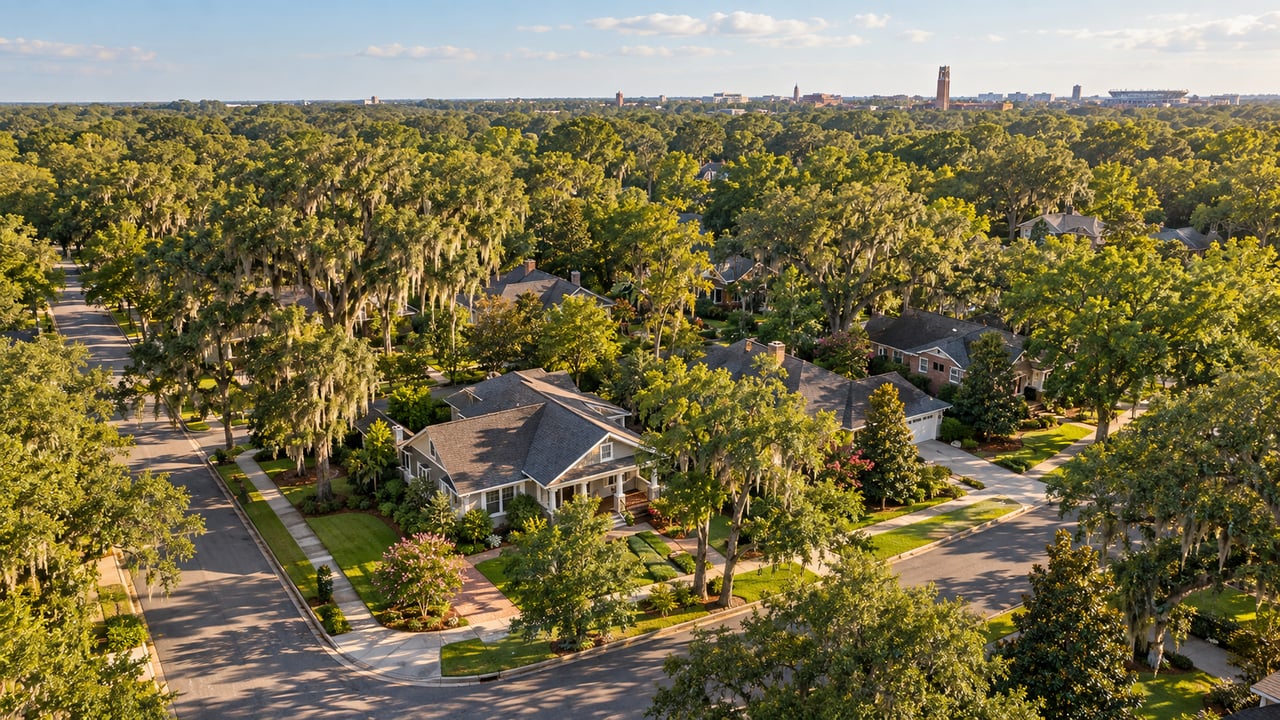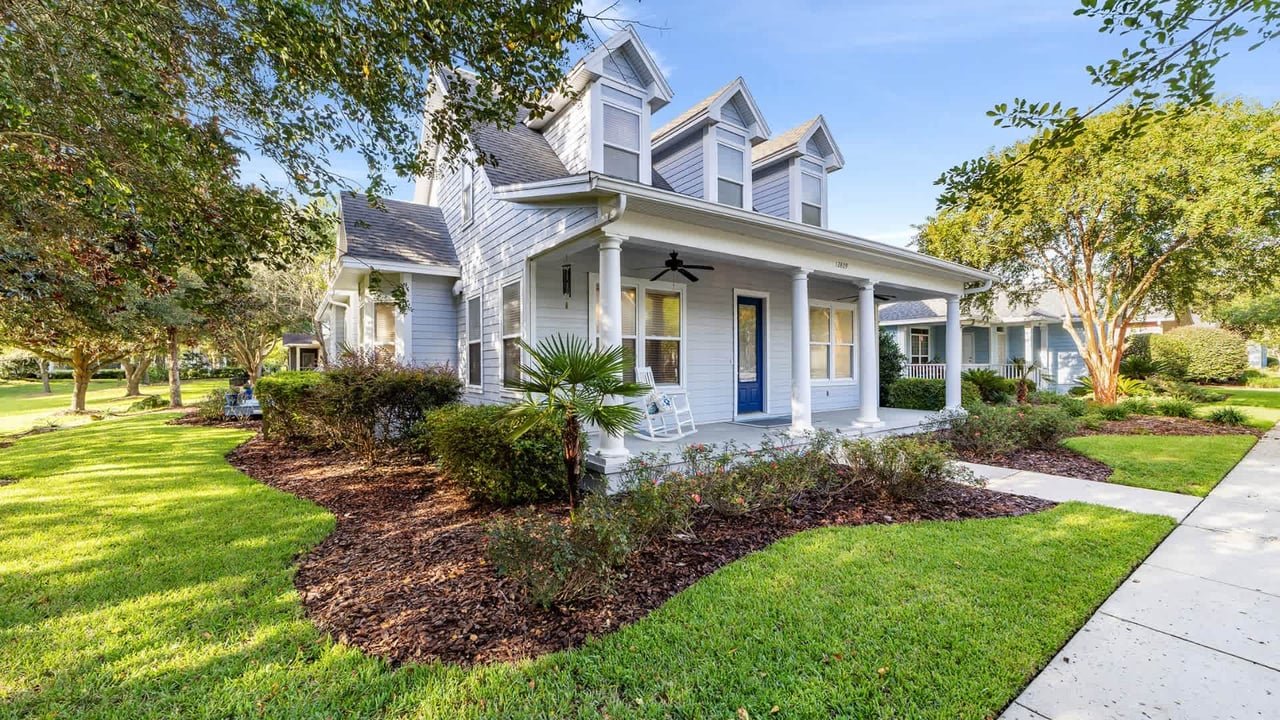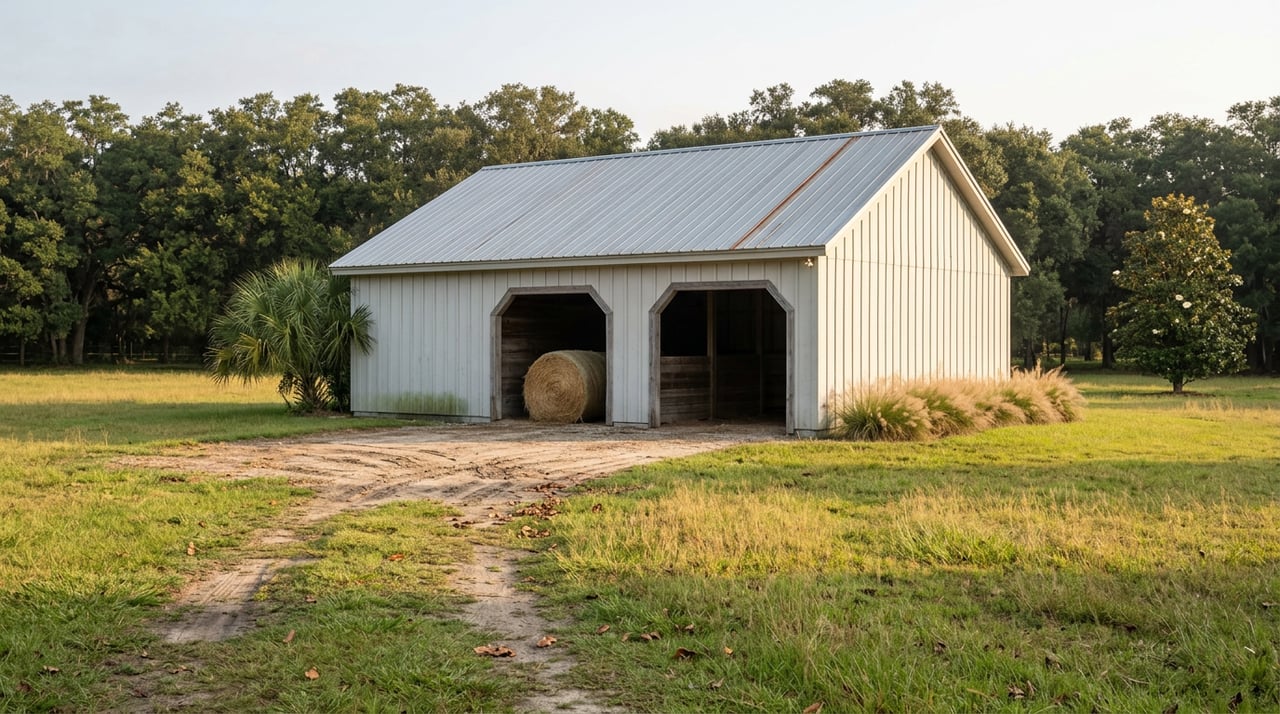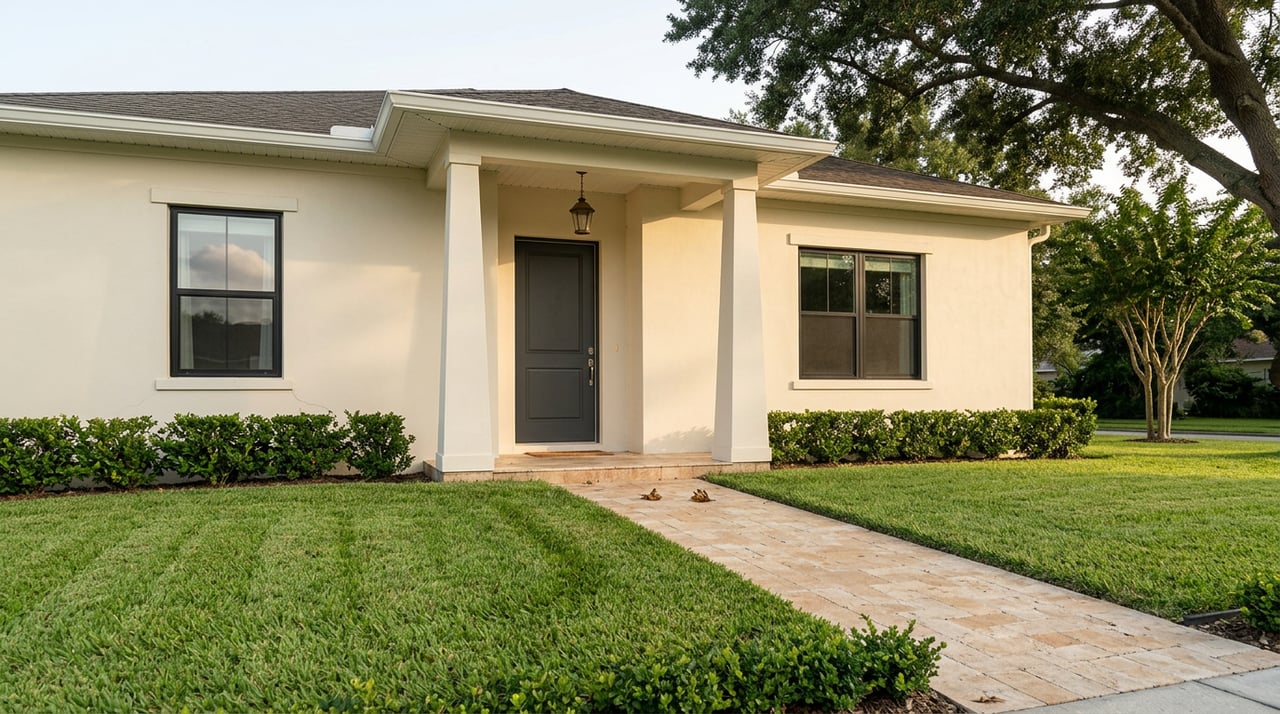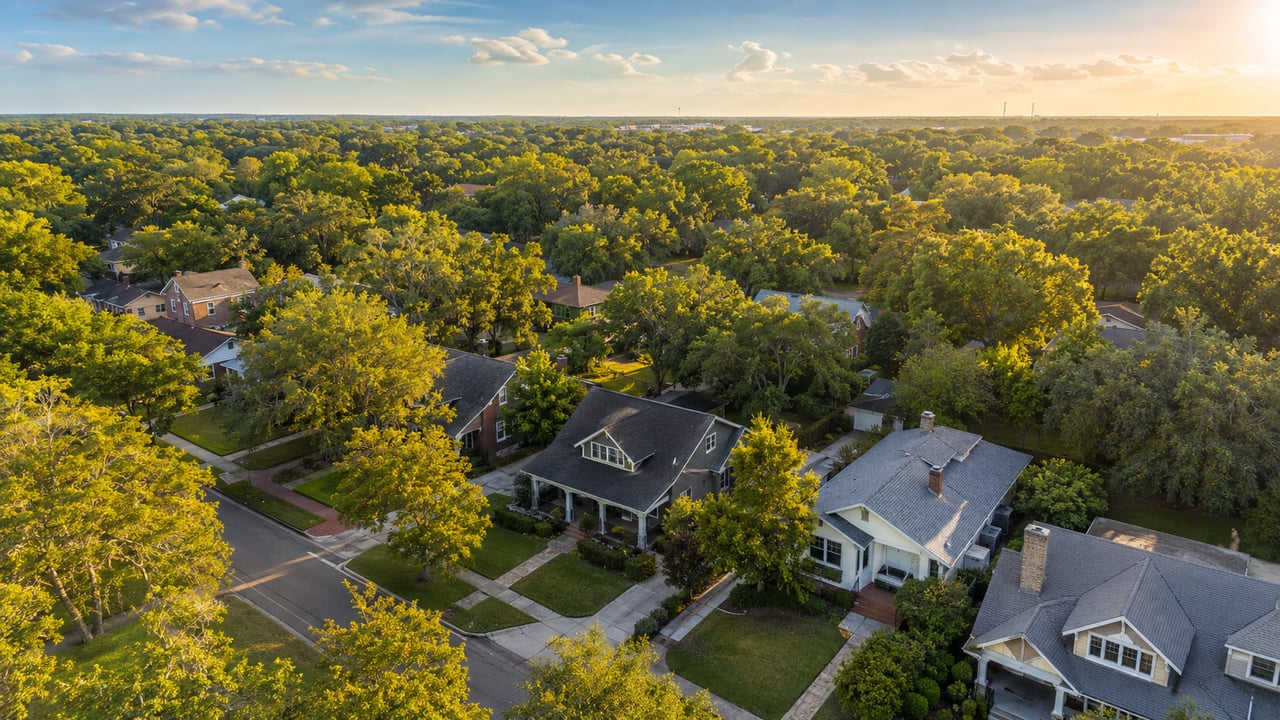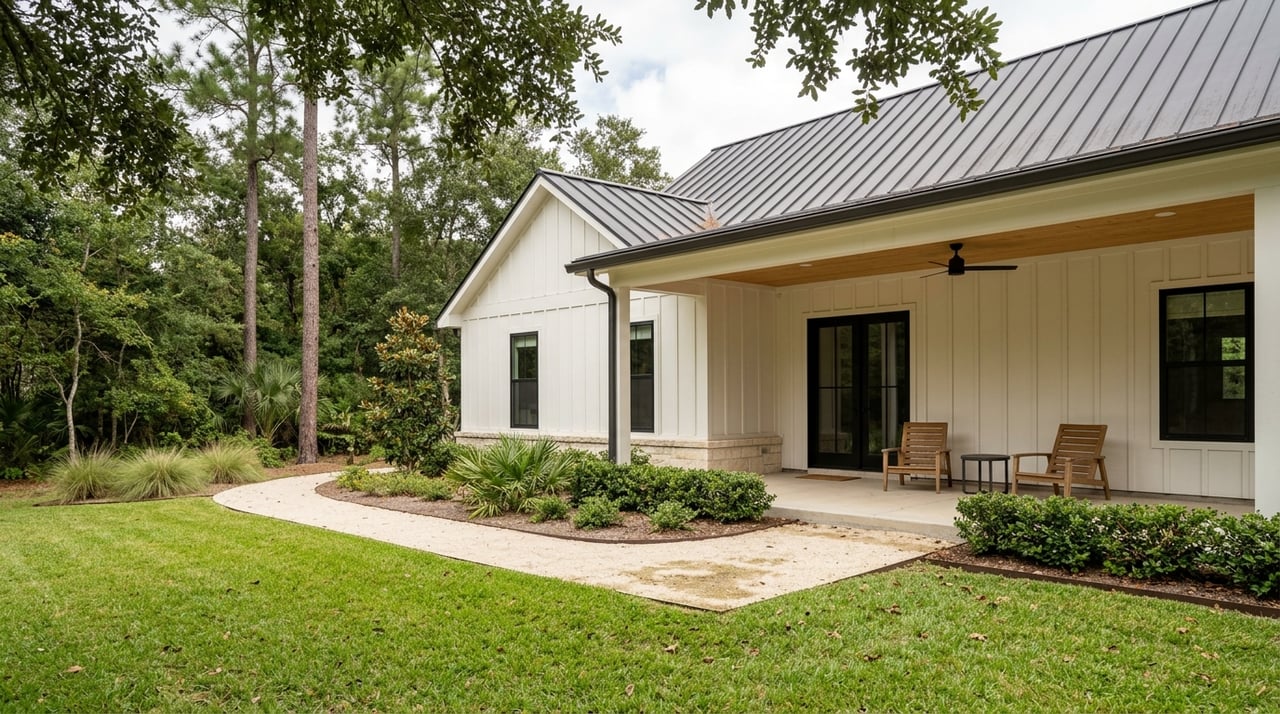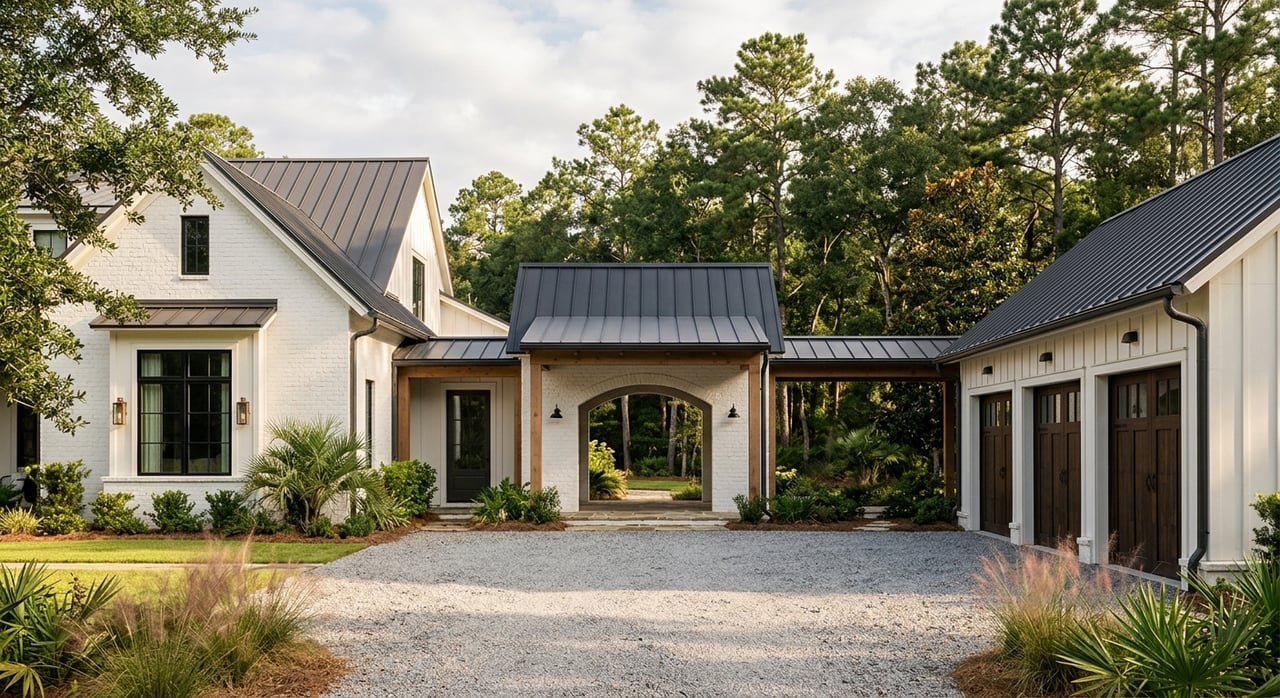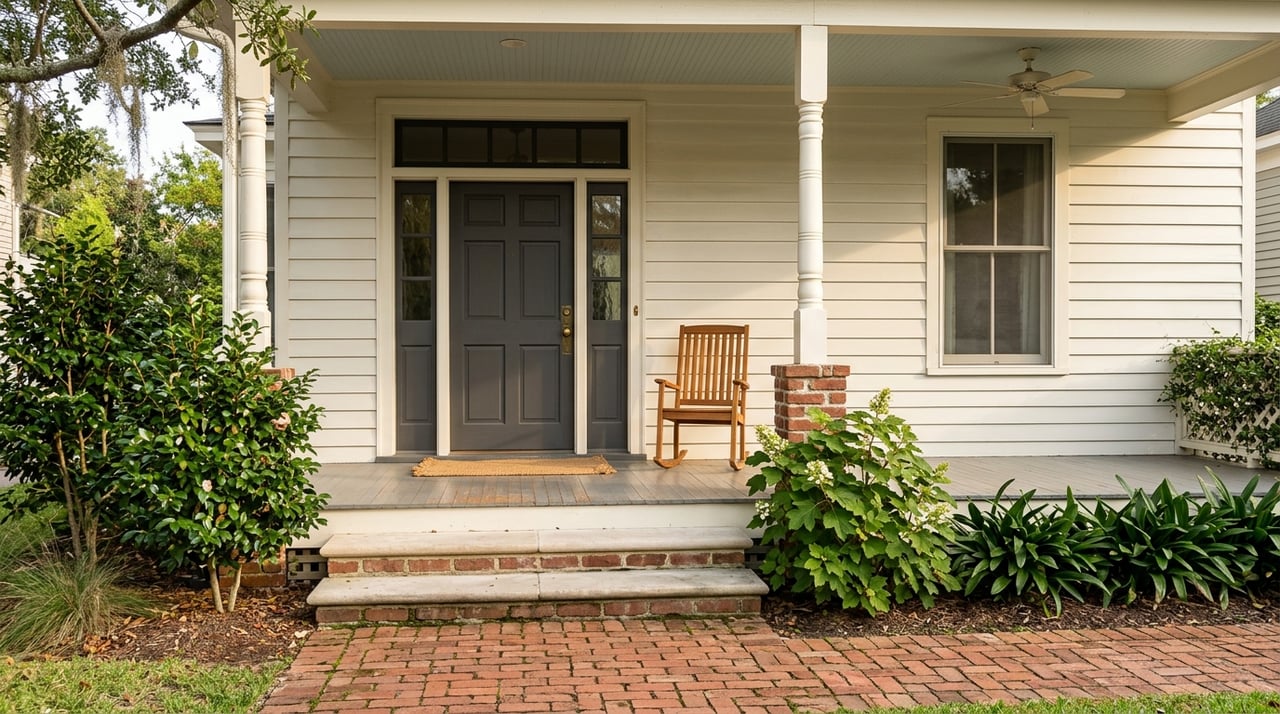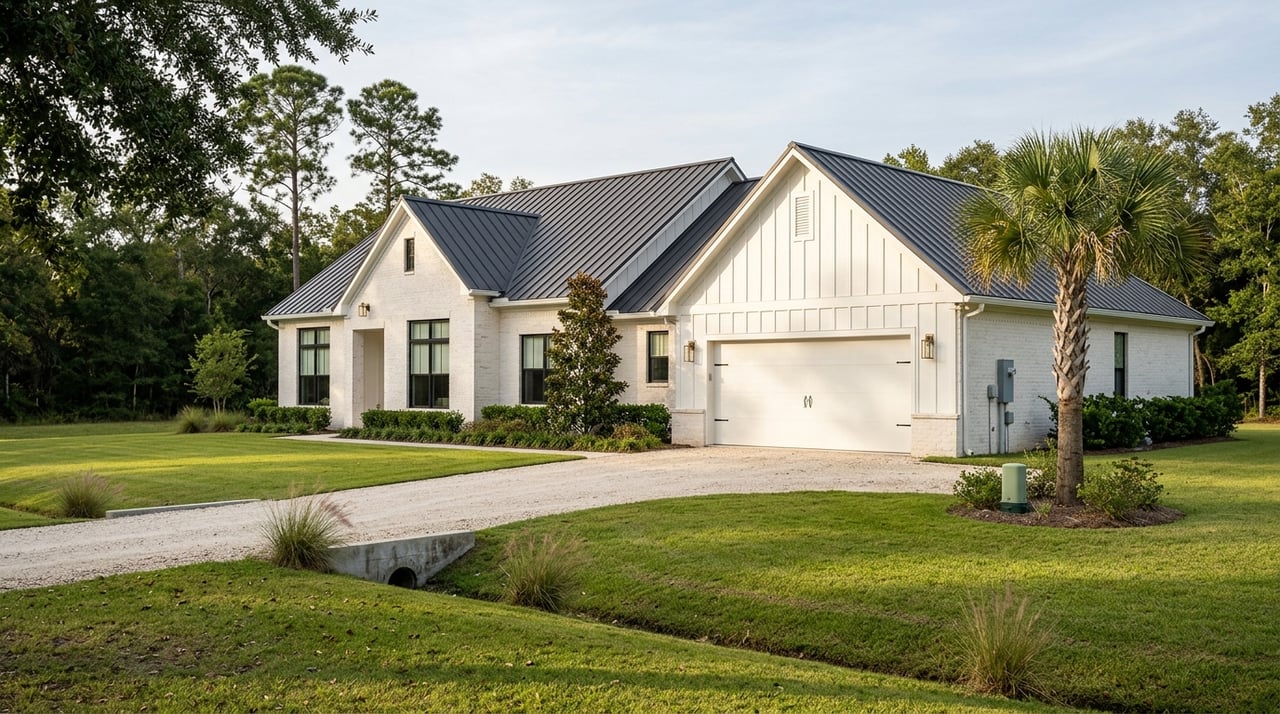
Ask two sellers of land near Micanopy which county their acreage sits in and you can get two different answers, even when both parcels share the same 32667 zip code. That split used to be a footnote, the kind of detail a listing mentions in passing about tax rates or school zones. This year it became something more consequential. Alachua County rolled out a new septic requirement tied to state water quality law, and it reaches the land around Micanopy in a pattern that doesn't match how most buyers think about acreage, county lines, or cost.
If you're looking at raw land, a rural homesite, or an existing property with a private septic system anywhere near the historic district, three separate boundaries now determine what you'll pay and who you'll deal with: which county holds the parcel, which drainage basin it falls in, and how large the lot is. None of those three lines move together, and that's the part worth understanding before you write an offer.
One Zip Code, Two Counties
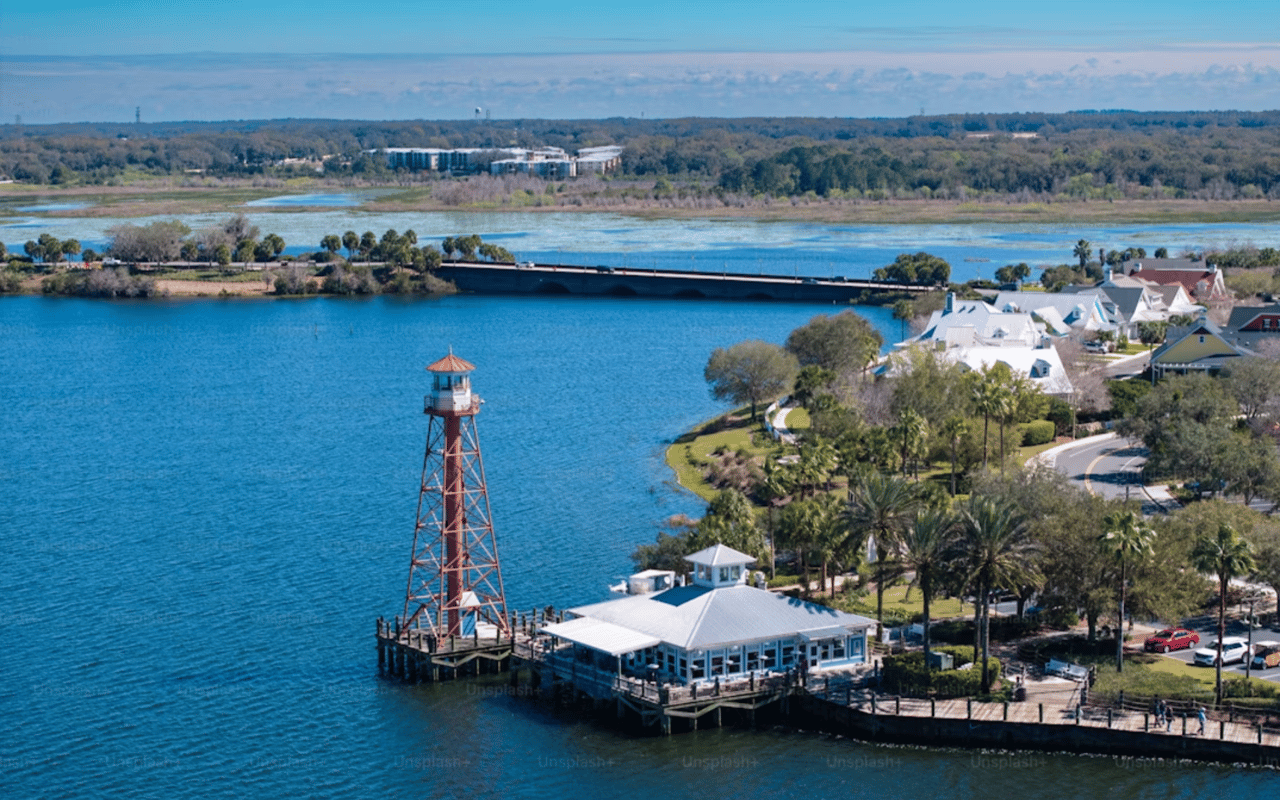
Micanopy's downtown, the historic district on the National Register of Historic Places, sits in Alachua County. But the 32667 zip code that wraps around it extends well past the town line, and roughly a third of that zip code's population falls in Marion County rather than Alachua, according to zip code demographic data. Acreage listings in the area reflect this directly. It's common to see land marketed near Micanopy with language pointing to "Marion County property tax positioning" as a selling point, because sellers already know buyers care which county they're landing in for tax purposes.
Septic permitting follows the same divide, and the two counties don't handle it the same way. In Alachua County, septic systems are permitted and inspected through the county health department's environmental health division, the standard model used across most of Florida. Marion County works differently. Since 2021, the Florida Department of Environmental Protection took over onsite sewage permitting directly for Marion County rather than leaving it with the local health department, a change that applies to a short list of counties statewide. That means a buyer closing on a Marion County parcel near Micanopy is dealing with a state agency for septic approvals, while a buyer a few hundred yards away in Alachua County is dealing with the county health department. Different office, different process, different timeline expectations.
What Changed This Summer
In August, Alachua County announced new septic requirements tied to updates in the state's Basin Management Action Plans, the water quality restoration framework the Florida Department of Environmental Protection uses to reduce nitrogen pollution in springs and groundwater. The requirements build on House Bill 1379, passed by the Florida Legislature in 2023, which set statewide rules for Enhanced Nutrient Reducing septic systems, commonly shortened to ENR-OSTDS. In plain terms, these are septic systems built to treat nitrogen before it reaches groundwater, something a conventional tank and drain field doesn't do.
The county's rule isn't one blanket requirement. It sets three separate tiers, and they don't apply evenly across Alachua County:
- Inside the Silver Basin, both new and existing septic systems on any size lot must convert to ENR technology by 2046.
- Inside the Santa Fe Priority Focus Area, new septic systems on any size lot must use ENR technology now.
- Inside the Orange Creek Basin and the rest of the Santa Fe Basin outside the priority focus area, only new systems on lots of one acre or less trigger the requirement.
Land around Micanopy falls under that third tier. The Orange Creek Basin is the drainage area that includes Paynes Prairie and Orange Lake, both of which border the town, and it's primarily an Alachua County basin. The trigger there is narrower than in the stricter zones elsewhere in the county. A new septic system on a small lot needs the nitrogen-reducing technology. A new system on a larger tract doesn't, at least not under this particular rule.
Why Lot Size Cuts the Opposite Way You'd Expect
Most buyers assume more acreage means more regulation, more permitting friction, more cost. Near Micanopy, the new septic rule runs backward. A buyer purchasing ten acres and building a home with a new septic system is currently outside the ENR requirement under the Orange Creek Basin tier, because the trigger only applies to lots of one acre or less. A buyer purchasing a smaller in-town lot, closer to the historic district, and building new is inside it.
| Situation | Basin tier | ENR system required? |
|---|---|---|
| New construction, lot over 1 acre, Orange Creek Basin | Orange Creek | Not required under this tier |
| New construction, lot at or under 1 acre, Orange Creek Basin | Orange Creek | Required |
| Existing septic system, anywhere in the Silver Basin | Silver Basin | Required, phased in by 2046 |
| New system, any lot size, Santa Fe Priority Focus Area | Santa Fe (priority) | Required now |
This matters most for buyers weighing a smaller parcel closer to town against a larger tract farther out. The larger acreage purchase, the one that looks like the bigger commitment on paper, may actually be the one that avoids the added septic cost, at least for now.
The Rebate Doesn't Reach the Same Places the Rule Does
Alachua County's Environmental Protection Department received funding from the state to offer rebates of up to $16,000 to homeowners upgrading existing septic systems to ENR technology. Stacie Greco, the county's water resources program manager, put the reasoning behind the rule directly: traditional septic systems don't treat the nitrogen in wastewater, and nitrogen is a leading cause of harm to groundwater, springs, and the algal blooms that follow.
The rebate program, as described by the county, is available within the Silver and Santa Fe basins. Orange Creek Basin, the tier that actually touches land around Micanopy, isn't listed among them. That leaves an odd gap for buyers in this specific area. A new septic system on a small lot in the Orange Creek Basin can be required to use the more expensive nitrogen-reducing technology, while the assistance program built to offset that cost is earmarked for other parts of the county. Anyone budgeting for a septic system near Micanopy should confirm current rebate eligibility directly with the county rather than assuming the program applies, since eligibility is tied to the basin, not the county line alone.
What to Check Before You Write an Offer
A few steps can save weeks of back and forth once a contract is signed:
- Confirm the parcel's county through the property appraiser's parcel records, not the mailing address. A Micanopy zip code doesn't guarantee Alachua County.
- Check which basin covers the specific parcel using Florida DEP's ENR-OSTDS mapping resources before assuming a septic cost estimate is accurate.
- If you're building new on a lot at or under one acre, budget for a nitrogen-reducing system if the parcel sits in the Orange Creek Basin or the Santa Fe Priority Focus Area.
- If you're buying an existing home with a septic system, ask whether the parcel falls in the Silver Basin, where existing systems face a longer runway but an eventual conversion requirement.
- Call the Alachua County Environmental Protection Department directly to confirm current rebate eligibility rather than assuming it extends to your basin.
- If financing through FHA or VA, expect the appraiser to flag any visible sign of septic failure regardless of which county or basin the property sits in.
A Few Questions Before You Call a Septic Contractor
Does this apply if I'm buying a home with an existing septic system? Only if the property sits in the Silver Basin, where existing systems have until 2046 to convert. Outside that basin, an existing system near Micanopy isn't currently required to upgrade.
How do I find out which basin my parcel is in? Florida DEP maintains mapping resources for ENR-OSTDS requirements that let you check a specific address or parcel. County property appraiser records will confirm which county holds the parcel.
Is there a similar rebate on the Marion County side? The program described here is specific to Alachua County. Nothing in the current record points to an equivalent Marion County rebate for septic upgrades.
Does Florida require a septic inspection before I can sell? No. Florida doesn't mandate a pre-sale septic inspection statewide, and Florida's disclosure standard covers known material defects rather than requiring an inspection to uncover them. Most buyers and their lenders request one anyway, particularly on FHA and VA financed purchases.
Land near Micanopy still offers what it's always offered: acreage, privacy, and a slower pace within reach of Gainesville and Ocala. The county line and basin boundary running through that market just got more expensive to ignore. If you're comparing a specific parcel and want help confirming which rules actually apply to it, Anson Properties can walk through the county records and basin maps with you before you make an offer, not after.